
English 
T: +86-130-7422-1289
E: tianyhzp@163.com
E: tianyhzp@163.com
No. 41, Third Ring Road, Longtang Community, Shilin Town, Nanhai District, Foshan City (Workshop 1, First Floor, East Side, Second Floor, Third Floor)
Views: 0 Author: Site Editor Publish Time: 2026-06-02 Origin: Site


Transitioning to or evaluating new cartridge systems presents a critical business risk for tattoo studios. Balancing operational efficiency against the non-negotiable requirements of cross-contamination prevention and execution precision remains vital. Subpar cartridges introduce needle wobble, inconsistent pigment delivery, and hidden backflow hazards. These flaws compromise both artwork and client safety. They expose studios to severe public health code violations and reputational damage. A single contaminated grip can destroy hard-earned client trust instantly.
A compliant, high-performing Tattoo Cartridge Needle must be evaluated on three strict pillars. You will learn to verify true sterility through advanced membrane technology. We will also explore mechanical stability via internal guidance structures. Finally, you will discover how optimized housing designs secure reliable ink flow. Mastering these criteria protects your clients and elevates your daily craft.
Not all safety membranes are created equal; genuine anti-backflow mechanisms are required to meet strict public health and cross-contamination standards.
Ink flow issues are rarely just about the ink; they are typically symptomatic of a mismatch between needle taper, housing reservoir design, and machine voltage.
Evaluating specialty needles (like an SMP tattoo cartridge needle) requires different stability metrics than standard lining or shading configurations.
Studios must implement standardized testing protocols when shortlisting new brands to verify EO gas sterilization and consistent needle tension.
Cross-contamination through the machine grip acts as a primary liability for any working artist. Relying on non-membrane or faulty-membrane cartridges exposes the studio to severe health code violations. Bloodborne pathogens travel easily through microscopic fluid droplets. Without a physical barrier, these droplets enter the motor housing. Standard sanitization wipes cannot reach internal motor components. This reality makes single-use membrane systems the absolute industry baseline.
You must differentiate between true membranes and basic rubber band systems. Rubber bands simply pull the needle bar back into the housing. They offer zero fluid protection. True membranes create a sealed, waterproof barrier. You can physically test this mechanism at your station. Push the needle bar forward and drop water into the back of the module. If water drips through the front nozzle, the seal is fake. A genuine membrane holds the fluid completely.
Ethylene Oxide (EO) gas sterilization verification forms the next critical step. Legitimate blister packaging always features chemical indicator dots. These dots change color after successful gas exposure. You should always inspect these dots before tearing the paper backing. Furthermore, manufacturers must utilize medical-grade plastic for the housing. Cheaper plastics risk leaching toxic compounds when exposed to specific ink solvents. Following established public health guidelines regarding grip reprocessing risks ensures your setup remains legally and medically compliant.
Precision relies heavily on the internal stabilization of the needle grouping. The plastic tip must cradle the pins perfectly. Poorly fitted tips allow lateral movement during operation. We call this movement "wobble." Wobble causes unnecessary epidermal trauma and blows out fine lines. Extended sessions compound this trauma, leading to heavier scabbing and poor healing.
Evaluating internal guidance systems requires close visual inspection. Premium cartridges feature specialized stabilizers inside the nozzle. These stabilizers guide the grouping smoothly along the central axis. They prevent side-to-side friction. Tension consistency also plays a massive role in mechanical stability. You must assess the resistance of the safety membrane. High tension overworks the machine motor and drains wireless batteries quickly. Low tension causes needle hang-ups, where the pins fail to retract fast enough between strokes.
Discipline-specific needs change your stability requirements. Standard color packing allows for slight flexibility. However, scalp micro-pigmentation requires absolute rigidity. Operating an SMP Tattoo Cartridge Needle demands precise dot placement. Any deviation destroys the illusion of natural hair follicles. Therefore, specialty modules require much tighter stability tolerances compared to standard shading setups.
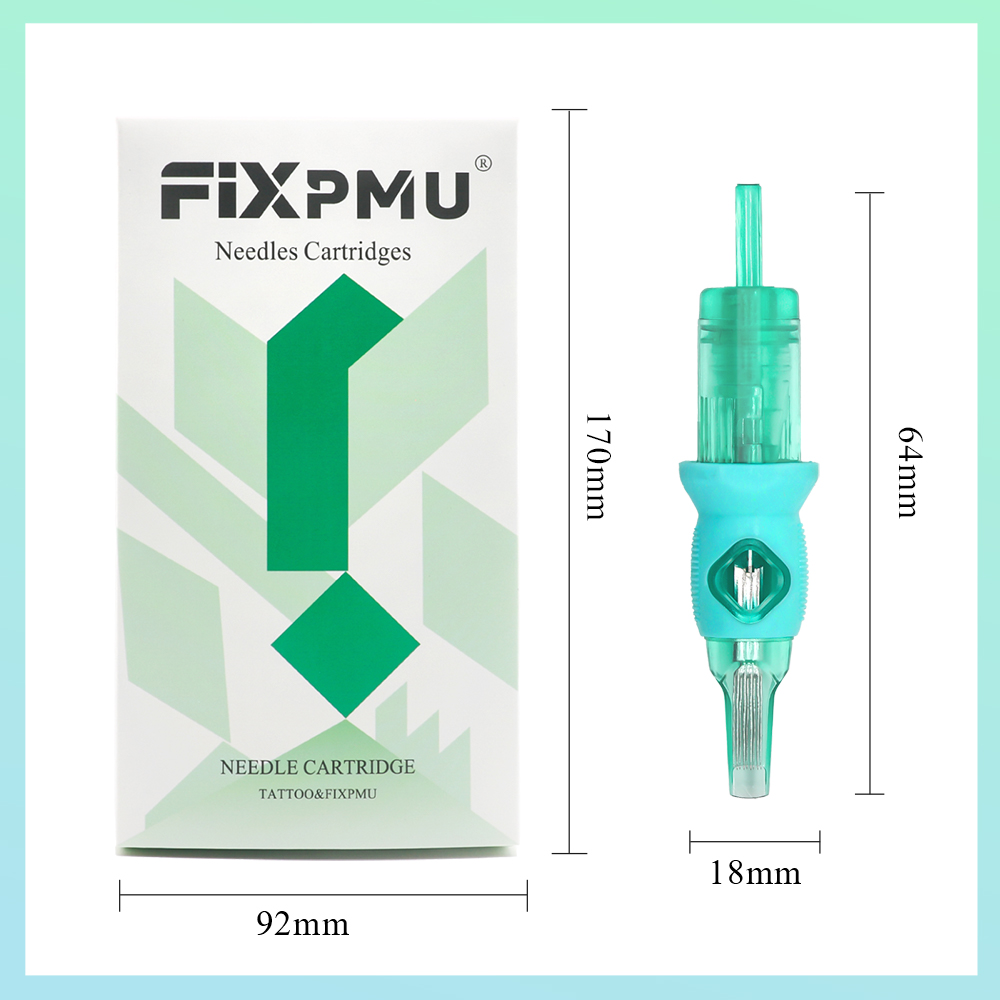
Addressing the common artist frustration of "spitting," pooling, or dry runs saves immense time. Ink flow issues rarely stem solely from the pigment itself. They typically indicate a mechanical mismatch. Understanding the relationship between the needle, the housing, and the machine resolves most headaches.
Taper and tip design directly influence fluid dynamics. Long tapers hold less ink but deliver it precisely. They suit thin, watery pigments well. Medium tapers hold more volume. They push thick, heavily loaded colors efficiently. You must also match the tip style to your technique. Closed tips create a stronger vacuum for runny inks. Open tips allow rapid cleaning and suit thicker color-packing pigments.
Airflow and reservoirs inside the cartridge housing dictate the release rate. The air vent design impacts the internal vacuum effect. Blocked vents cause flow starvation. Overly large vents cause the ink to dump prematurely. Machine synergy provides the final piece of the puzzle. You must adjust your voltage and stroke length to compensate for cartridge tension. A stiff membrane requires higher voltage to achieve proper penetration.
Troubleshooting Chart: Ink Flow Diagnostics | ||
Symptom | Likely Cause | Recommended Action |
|---|---|---|
Ink Spitting | Voltage too high or tip too wide | Lower the voltage; switch to a tighter nozzle. |
Dry Runs | Blocked air vent or tight membrane | Check vent clearance; increase machine stroke length. |
Pigment Pooling | Needle hang-up or slow hand speed | Increase voltage; ensure membrane retracts fully. |
Comparing modern cartridge systems against older formats reveals significant operational shifts. A Traditional Cartridge Needle often wraps standard bar needle groupings into a modular format. These mimic the exact feel of legacy coil setups. Modern tooling completely reimagines pin spacing and housing geometry.
Performance trade-offs exist between these two approaches. Modern systems prioritize setup speed and modularity. You can switch from a tight liner to a magnum in three seconds. Traditional groupings offer distinct localized control. Some veterans prefer the specific solder patterns of older styles. You must weigh these benefits against your daily workflow demands.
A cost-per-unit analysis highlights deeper operational impacts. Fully adopting advanced cartridge systems reduces your reliance on grip bagging. It also minimizes autoclave cycles. You spend less time scrubbing metal tubes. This efficiency offsets the higher unit price of premium cartridges. However, we must acknowledge a transparent assumption here. Cartridges require higher torque machines. The motor must overcome the constant resistance of the safety membrane. Older, low-torque machines will stall when pushing large modern magnum configurations.
Navigating the saturated supply market requires an objective decision framework. You should never commit to a bulk studio order without testing a sample batch first. Marketing claims often fall short under actual studio conditions. Establish a standardized evaluation protocol for every new box you receive.
Different brands excel in different use cases. You might evaluate the FIX Tattoo Cartridge Needle for its rigid internal stabilization. This makes it an excellent candidate for intricate fine-line work. Conversely, you might assess the Shark Tattoo Cartridge Needle for heavy shading. Its optimized tip reservoirs supposedly offer superior flow control during dense color packing. Identifying these specific strengths prevents you from relying on a single brand for every artistic style.
Implementing "The Cut Test" provides practical, hands-on methodology for artists. This test reveals the hidden manufacturing quality of any module.
Sterilize a used cartridge thoroughly.
Dismantle the plastic housing using heavy-duty snips.
Inspect the solder quality holding the pins together. Look for excess lead or messy joints.
Check the straightness of the individual pins under a magnification lamp.
Verify the internal membrane seating to ensure it hasn't warped from motor friction.
Risk mitigation strategies protect your bottom line. Avoiding the sunk cost of bulk-buying unverified configurations is crucial. A massive inventory of poorly performing needles drains resources and frustrates your team. Take measured steps when integrating new tooling.
Standardizing needle combinations across the studio streamlines your ordering process. Limit the sheer variety of tapers and gauges. Identify the ten most utilized configurations. Stock those heavily. This prevents dead inventory from gathering dust on the shelves. It also ensures every artist has access to reliable daily drivers.
Safe disposal protocols require careful attention. Cartridge modules contain heavy-duty medical plastic and surgical steel. They fill standard sharps containers rapidly. You must schedule more frequent biohazard disposal pickups. Finally, use your consumables to build client trust. Visually demonstrate the blister-pack opening process. Point out the EO gas indicator dot. Explain how the safety membrane protects them. This transparent communication reinforces your hygiene authority and puts nervous clients at ease.
The right tattoo cartridge needle acts as a seamless extension of the machine. It safeguards the client while entirely removing mechanical friction from the artist's workflow. Prioritizing verifiable sterility, rigid internal stability, and engineered ink flow prevents daily operational headaches. By strictly evaluating membrane tension and tip geometry, you protect your studio from cross-contamination liabilities.
Your next step requires action. Initiate a blind test of two or three shortlisted cartridge brands. Focus strictly on membrane integrity, line consistency, and flow under standard studio conditions. Run this trial before finalizing any bulk purchasing agreements. Quality tooling is an investment in your artistic reputation.
A: You can perform a quick physical test. Push the needle bar forward and place a few drops of water into the back of the cartridge. If water leaks through the front nozzle, the seal is ineffective. A true safety membrane creates a waterproof barrier. You should also visually inspect the housing seal for tight, continuous seating around the inner plastic wall.
A: Ink spitting usually indicates a mismatch between your machine settings and the cartridge tip. Running the voltage too high causes the needle to agitate the fluid violently. It also happens if you use a very thin pigment inside an overly wide, open tip. Lowering your voltage or switching to a tighter, closed-tip configuration usually resolves the pooling and spitting.
A: Generally, yes, but they perform differently. SMP needles feature highly specialized gauges, ultra-long tapers, and extreme housing precision. Manufacturers design them specifically to resist the tough, tight skin of the scalp. While they create flawless dots, their extreme rigidity might feel abrasive or overly sharp on softer body tissue during standard fine-line pulling.
A: Most utilize a universal twist-and-lock mechanism. This makes them compatible with the vast majority of modern rotary and pen-style machines. However, certain proprietary systems restrict compatibility. Always check your machine's grip specifications. Additionally, traditional bar groupings inside cartridges might require higher motor torque to overcome the added tension of the safety membrane.


