
English 
T: +86-130-7422-1289
E: tianyhzp@163.com
E: tianyhzp@163.com
No. 41, Third Ring Road, Longtang Community, Shilin Town, Nanhai District, Foshan City (Workshop 1, First Floor, East Side, Second Floor, Third Floor)
Views: 0 Author: Site Editor Publish Time: 2026-06-11 Origin: Site


In Permanent Makeup (PMU), the margin for error is nonexistent. Every pass you make dictates pigment retention. It also controls skin trauma levels. Ultimately, it determines the final healing times. Early tools lacked nuance and precision. They often resulted in unpredictable outcomes. Today, the modern Tattoo Cartridge Needle has completely revolutionized the field. Cross-industry engineering now provides unmatched control. It allows artists to achieve hyper-realistic results effortlessly.
However, the sheer volume of options can easily overwhelm practitioners. Navigating the market requires more than just reading labels. You need a deep understanding of needle mechanics. This article aims to provide an evidence-based framework. We will help you match specific cartridge configurations to distinct PMU techniques. You will learn to optimize setups for delicate hair strokes. You will master configurations for lip blush and areola restorative work.
We will filter out the marketing noise together. You can optimize your toolset securely. Elevate your artistry by making informed, technical decisions. Your clients deserve consistent, beautiful results every single time.
Technique dictates configuration: Round Liners (RL) dominate precision work, while Curved Magnums (CM) and Flats are non-negotiable for seamless misting and color packing.
Safety and compliance first: True safety membranes are mandatory to prevent cross-contamination and machine backflow; do not compromise for cheaper alternatives.
Taper and gauge matter: Short tapers deposit more pigment for packing, while long tapers offer the minimal trauma required for delicate facial skin.
Ecosystem matching: Transitioning from a traditional cartridge needle to specialized PMU or SMP variants requires verifying machine stroke compatibility.
Unpredictable ink flow directly translates to blowouts. Needle wobble causes patchy healing. These mechanical failures create costly touch-up appointments. Touch-ups drain your daily schedule. They frustrate your clients immensely. A poorly chosen needle micro-slices the skin. It causes excessive bleeding and pushes pigment out. You lose valuable time correcting these preventable mistakes. Consistent tools prevent these cascading failures entirely.
A high-quality cartridge delivers consistent needle tension. You need zero lateral play within the tip. The needle must travel perfectly straight. Capillary action must remain predictable for smooth pigment flow. When you achieve this balance, your work improves immediately. The pigment drops into the dermis effortlessly. You spend less time wiping away excess ink. You can focus entirely on your artistic technique.
Saving pennies on bulk options hurts you. Unverified cartridges damage client retention quickly. They ruin artist reputations in competitive markets. Inconsistent healed results cost far more than premium tools. Clients notice when their brows heal unevenly. They talk to their friends about painful procedures. We must view needles as crucial investments. They directly impact your clinic profitability. High-quality tools build long-term client trust.
Common Mistake: Buying unbranded needles to reduce overhead costs.
Best Practice: Track the healed results of different needle brands over six months.
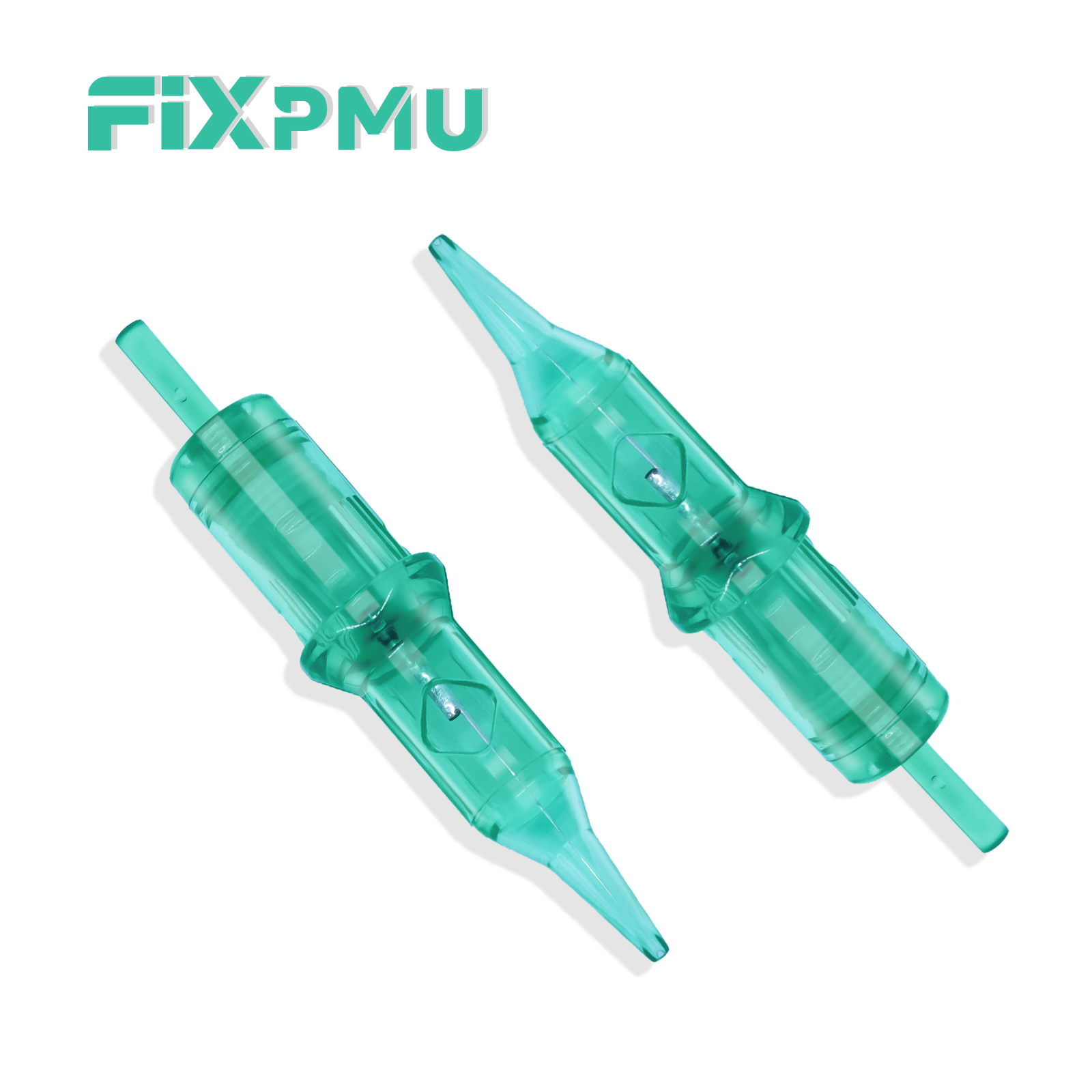
Stiff membranes bog down low-voltage machines. Overly soft membranes risk immediate backflow. You must balance tension carefully. A stiff membrane forces the motor to work harder. This reduces the actual hitting power of the needle. A soft membrane lacks the necessary retraction speed. It causes the needle to hang in the skin. You must match the membrane resistance to your machine stroke.
Full-sealing safety membranes are mandatory. They meet rigorous health department standards everywhere. They protect your internal machine motors completely. Fluids traveling up the drive bar cause catastrophic failure. Cross-contamination destroys clinics and ends careers. You cannot sterilize the internal motor of a PMU pen easily. A sealed membrane is your only line of defense. Never compromise on this specific feature.
The internal geometry of the plastic tip matters deeply. It controls pigment pooling during the procedure. Good design ensures high visibility during micro-detailing. You can see exactly where the needle lands. Elongated tips hold a larger reservoir of ink. They reduce the frequency of dipping. Transparent plastics let you monitor the flow rate. Opaque tips often hide dangerous pigment clogs.
Do not trust "anti-wobble" marketing claims blindly. Physically test the needle grouping's lateral movement yourself. Press it gently against the cartridge tip. You will quickly feel any instability. Poorly molded plastics leave gaps. These gaps allow the needle to vibrate laterally. Lateral vibration causes unnecessary trauma to facial tissue. Always verify stability before touching a client's skin.
Crisp linework requires specific tools. Round Liners (RL) excel here. Use 1-liner or 3-liner groupings for maximum control. Choose gauges between 0.18mm and 0.25mm. Long or extra-long tapers ensure minimal trauma. The long taper creates a tiny puncture hole. It leaves a delicate, fine dot. When dragged, it creates a hyper-realistic hair stroke. Hand speed and machine speed must align perfectly. The 1RL offers zero resistance. It penetrates delicate skin effortlessly.
Soft shading demands a different approach entirely. Round Shaders (RS) fit this role perfectly. Small Curved Magnums (CM) also perform beautifully. Spread-out groupings create pixelated misting effects. They avoid dense saturation completely. Curved Magnums fit the natural contours of the lip. They eliminate harsh, blocky edges. You can cover more surface area safely. It significantly reduces the time spent on the procedure.
Dense color packing requires aggressive saturation. Magnums (M1) or Flat Shaders deliver massive ink payload. Focus on 0.30mm to 0.35mm gauges. Medium tapers maximize pigment deposit per pass. They open the skin slightly wider. They drop more pigment directly into the dermis layer. You avoid over-working the delicate tissue. Swelling remains minimal. This setup is absolutely essential for areola restorative work.
Technique | Ideal Configuration | Recommended Gauge | Taper Focus |
|---|---|---|---|
Crisp Linework (Nano Brows) | Round Liner (1RL / 3RL) | 0.18mm - 0.25mm | Long / Extra-Long |
Soft Shading (Ombré Brows) | Round Shader / Curved Magnum | 0.25mm - 0.30mm | Medium / Long |
Dense Packing (Areola/Lips) | Magnum (M1) / Flat Shader | 0.30mm - 0.35mm | Medium |
Some artists need aggressive color packing capabilities. They require rigid stability during long procedures. The Shark Tattoo Cartridge Needle excels in this environment. It offers specific taper consistency. This consistency suits dense skin areas perfectly. It penetrates tough tissue without bending. Artists working on scar camouflage rely on this rigidity. It ensures consistent ink flow even under heavy pressure.
Other practitioners focus entirely on high-precision PMU work. They demand fine linework and delicate hair strokes. The FIX Tattoo Cartridge Needle provides exceptional internal stabilization mechanisms. It handles intricate details effortlessly. The housing prevents any micro-wobble during sweeping motions. You can execute perfect eyeliner wings safely. It remains a top choice for detail-oriented artists.
Scalp Micropigmentation presents entirely unique challenges. Follicle simulation demands absolute precision. An SMP Tattoo Cartridge Needle features textured tips. It uses tighter groupings compared to standard PMU setups. It focuses entirely on dot-retention without migration. The skin on the scalp behaves differently than facial tissue. Standard PMU needles often cause blowouts on the scalp. Specialized SMP tools prevent this disaster.
Sometimes, you might consider a Traditional Cartridge Needle. It remains highly viable for heavy color packing. Body art needles are built for robust saturation. However, they often prove too aggressive for delicate facial tissue. You must evaluate the skin type carefully first. Older skin tears easily under heavy gauges. Use traditional variants strictly for body camouflage or thick areola tissue.
The "universal fit" myth deceives many experienced artists. Universal cartridges often fit loosely in certain PMU pens. This looseness causes dangerous micro-vibrations. Micro-vibrations blur your crisp lines instantly. They cause unnecessary trauma to the epidermis. You must verify the physical lock-in mechanism. A secure twist-and-lock system prevents mid-procedure slipping. Never assume all cartridges fit all rotary machines perfectly.
You must adopt strict testing protocols for safety. Do not test new brands on paying clients directly. This risks your reputation and their skin. Follow a standardized procedure.
Visual Inspection: Check the membrane seal under a magnifying lamp for defects.
Synthetic Skin Trial: Run the needle to observe ink flow consistency and pooling.
Lateral Play Test: Press the needle grouping gently against the tip housing to check stability.
Live Model Application: Assess actual skin trauma and pigment retention on willing participants.
Inventory scalability presents another logistical risk. Adopting a proprietary system locks you in. If the manufacturer faces delays, your clinic halts. Universally compatible systems offer greater flexibility. You can switch brands during supply chain disruptions. You must maintain a reliable inventory flow. Running out of your preferred needle grouping halts production entirely. Plan your stock levels three months in advance.
There is no single "best" needle in the PMU industry. You only have the right configuration for a specific technique. You must align the needle with the client's skin type. You must match it to your machine stroke. Precision work requires stable Round Liners. Soft shading demands Curved Magnums or Round Shaders. Heavy packing necessitates Flat Shaders.
Audit your current machine specifications today. Purchase sample blister packs of targeted configurations. Mix liners and curved magnums to test boundaries. Standardize your testing protocols before rolling out new tools to the clinic. Elevate your practice by treating needle selection as a rigorous science. Your healed results will reflect this dedication.
A: Yes, if they utilize a true safety membrane and fit your machine securely. However, the gauge and taper must be carefully selected. Standard body art needles are often too thick. They can cause excessive facial trauma. Always opt for thinner gauges and longer tapers when adapting them for delicate PMU work.
A: SMP needles often feature textured tips and specific micro-gauges. They usually range from 0.15mm to 0.20mm. They are designed strictly for precise follicle simulation without blowout. PMU cartridges encompass a wider variety of configurations. They cater to hair strokes, shading, and solid lip packing.
A: You can perform the water or ink test. Run the cartridge in a pigment cup or water for several minutes. Remove the cartridge and check the back drive-bar area. If you find any moisture or ink behind the membrane, it has failed. Discard that brand immediately.
A: This connects directly to your machine's stroke and motor torque. Low-torque machines struggle to overcome the stiffness of certain internal membranes. A stiff membrane tension forces the motor to work harder. You must match a softer membrane cartridge to a low-voltage PMU machine for smooth operation.


